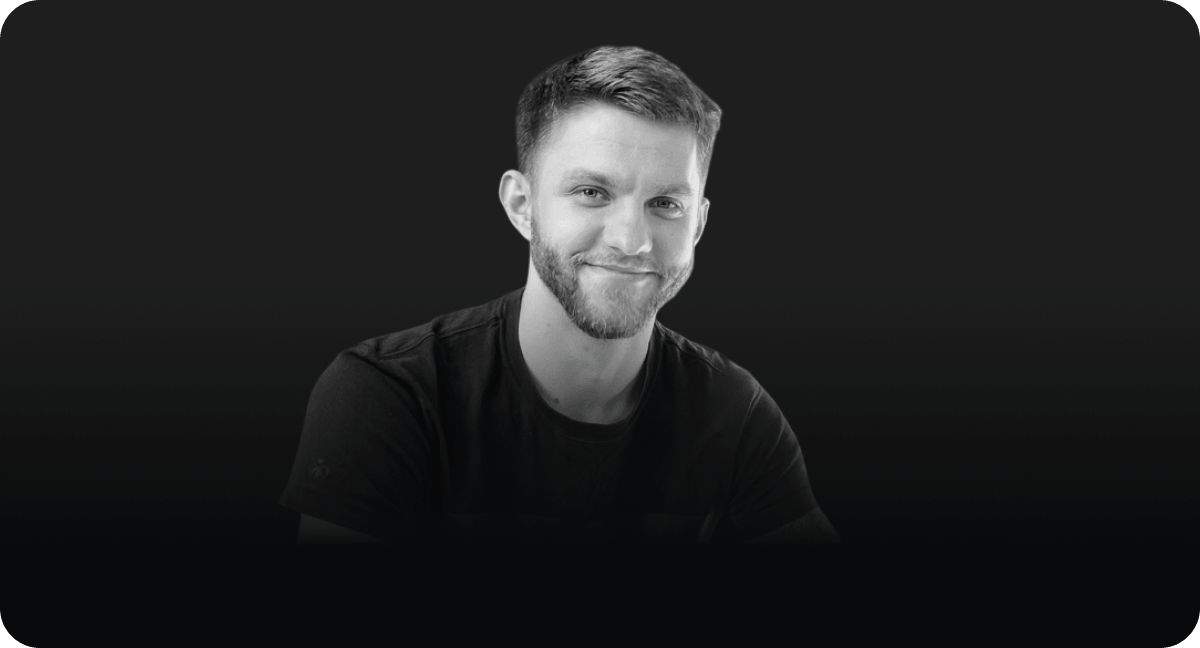
Can you introduce yourself and share a bit about what you were doing before TryCrush?
Hey, I'm Albertas. From Lithuania, grew up in a small village called Pajūris. Around 700 people, a church, two grocery stores, a school, and pretty much nothing else.
I was always obsessed with competing. Played volleyball at U18 level representing Lithuania, competed as a rifleman in Estonia, and at the same time was one of the top League of Legends players in the country and top 50 in Wild Rift across Europe. Competition calms me down. Still does.
In between all that I ran one of the biggest Minecraft servers in Lithuania at 14, making money through SMS top-ups before I even knew what that meant. At 16 I started my first real business with 500 euros from a youth entrepreneur grant. Print on demand. Failed in two months. At 17 I had 10,000 Instagram followers built through botting tools and was talking directly with the CEO of the automation company I was using.
Seven YouTube channels. A Twitch stream that peaked at 24 viewers. A merch brand killed by a developer who ghosted me. A handmade snack company killed by COVID. A protein meal startup killed by margins. Every single one failed.
Then I stumbled across paid advertising on YouTube. What I realised pretty quickly is that the competition in paid ads is not as fierce as people make it out to be. As long as you actually want to learn, you'll survive. The problem was I needed money to work with. So I started reaching out to companies, writing posts, putting myself out there. Eventually landed in ecommerce working with a jewelry brand. Got scouted by an agency after that. Then Kilo.health found me. And that's when things got serious.
What is TryCrush and what problem does it solve? Why did you decide to build this specific product?
I'm a media buyer. I've personally managed over $100 million in Facebook and TikTok ad spend, sometimes over $100k a day. I've taught media buying at two colleges and trained more than 20 people one on one.
After all of that, the problem is always the same. Media buying is more complicated than it needs to be, and most ecommerce founders shouldn't have to learn it. They have better things to do.
So I built a tool that does it for them.
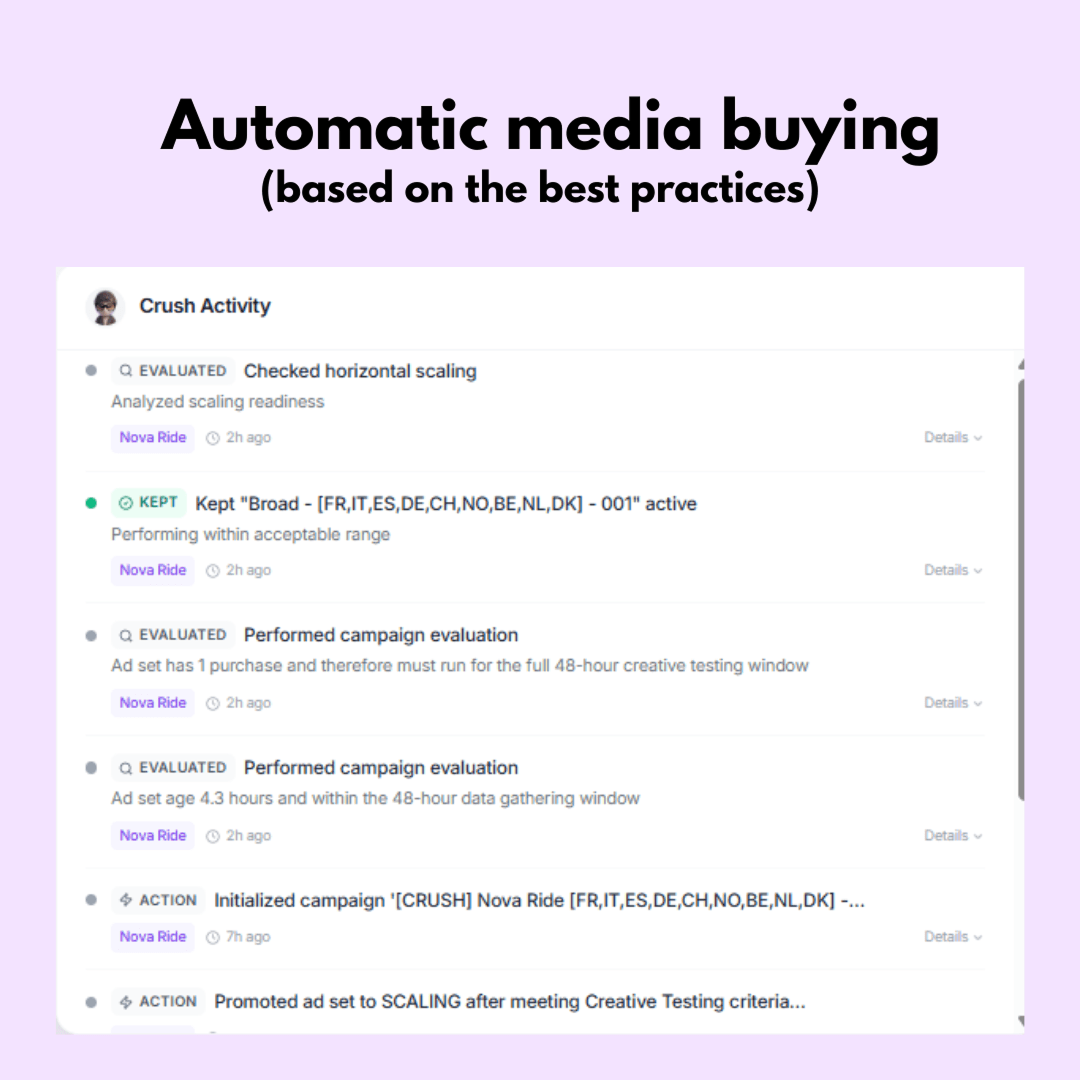
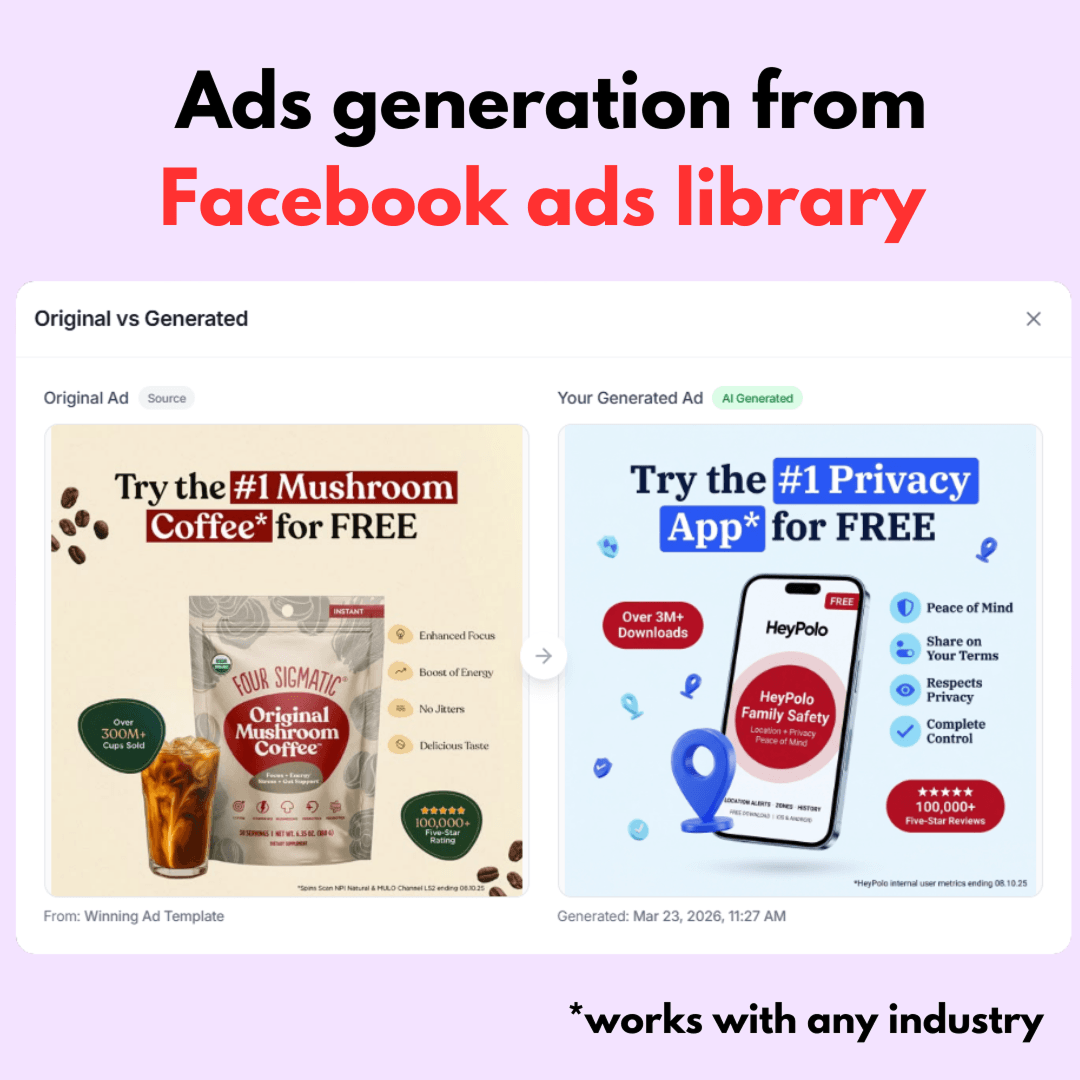
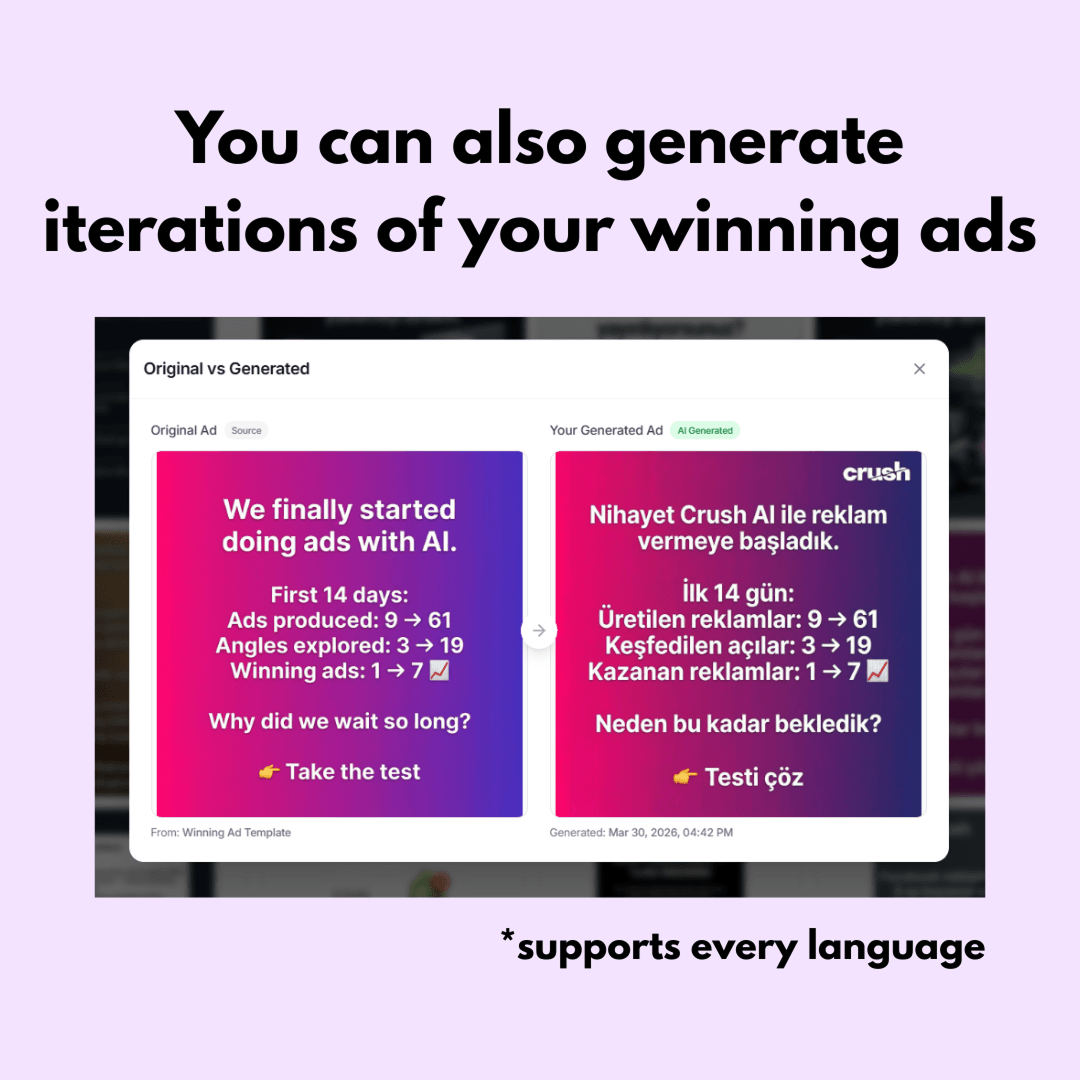
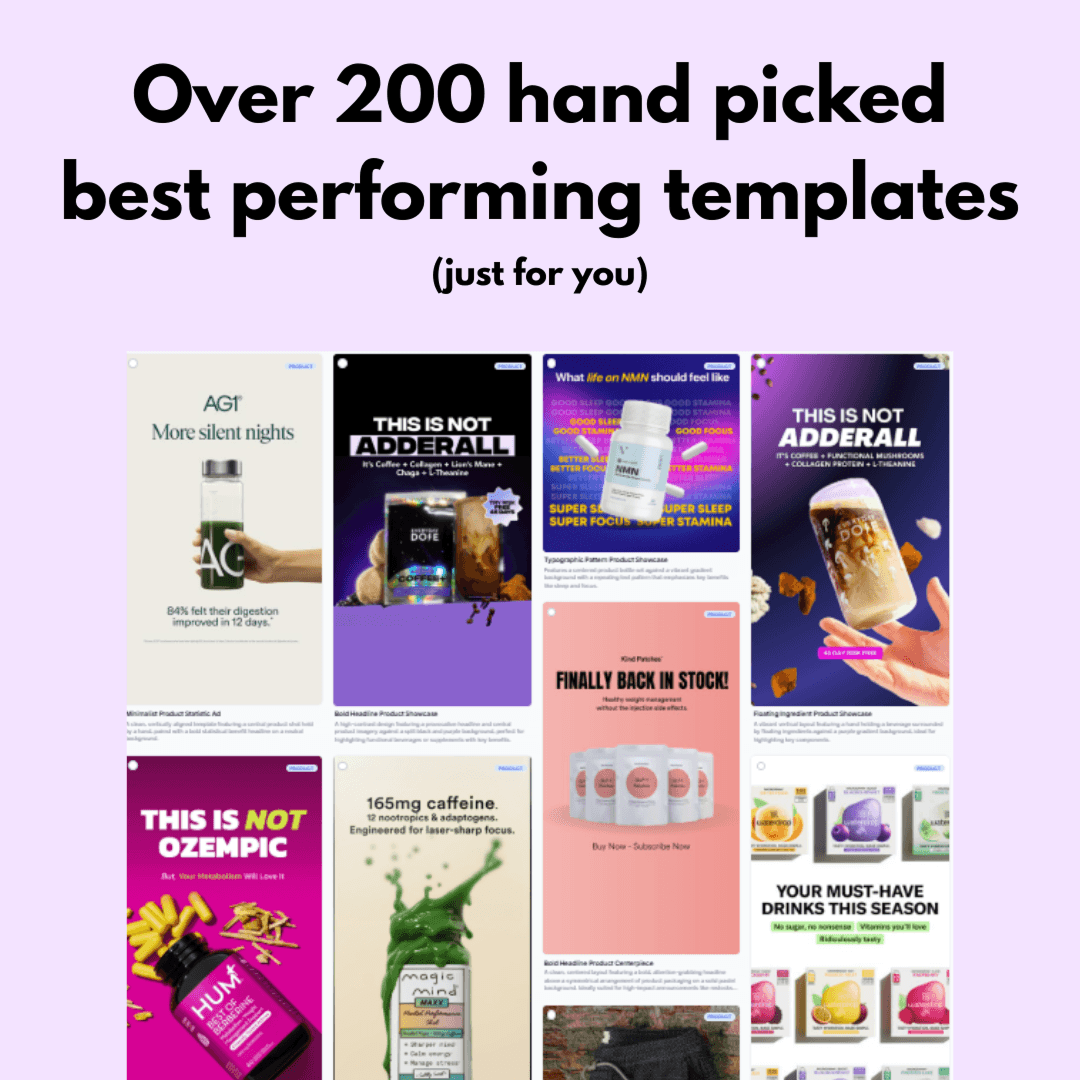
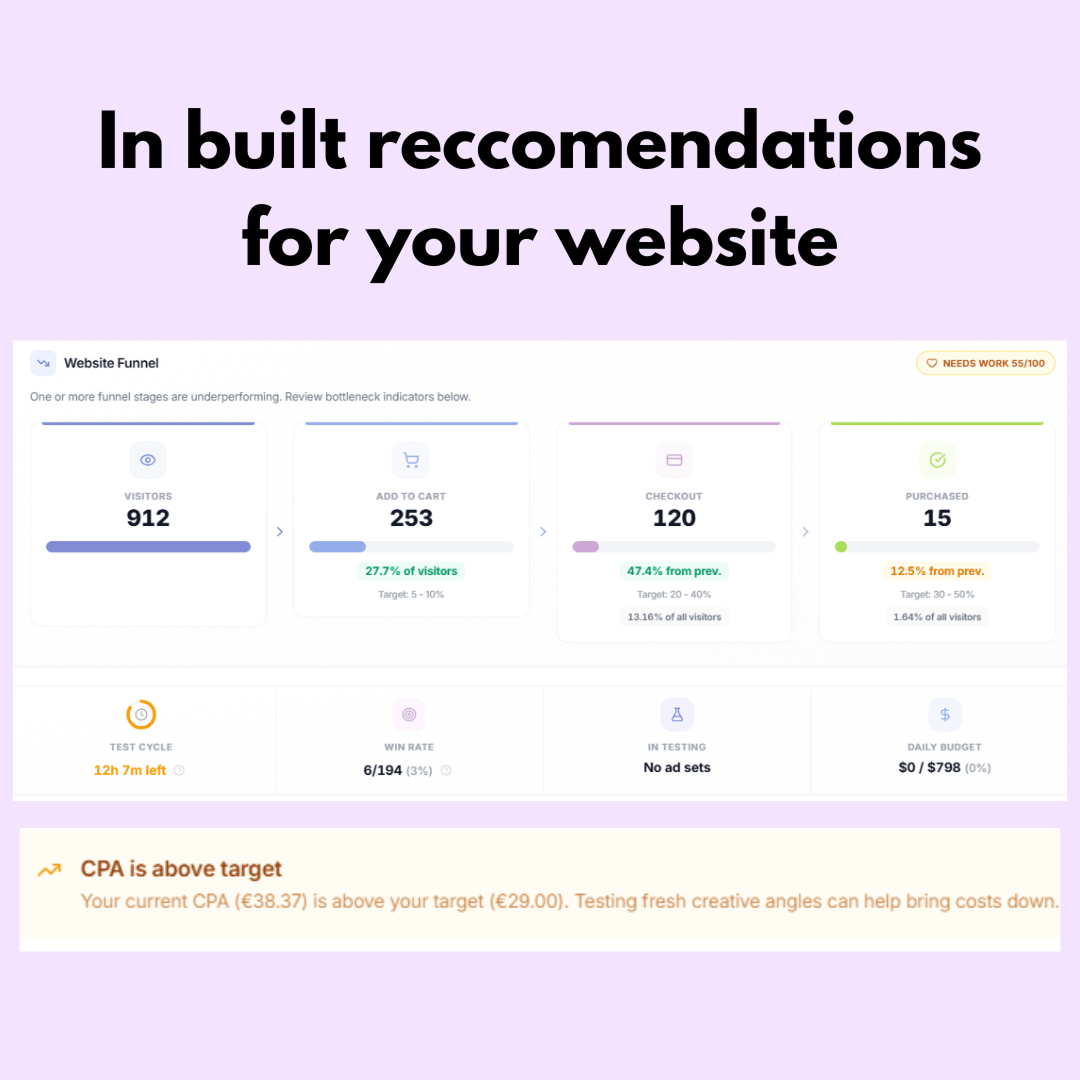
Crush generates static ad creatives, tests them in 48-hour cycles, pauses what doesn't work, and puts more budget behind what does. Built on the same practices I used managing real budgets at real scale.
The origin story with my co-founder Rokas is actually a good one. We met at Lost Astronaut, just started talking, and I wanted to work on something. He was already building the early version of this. We ran some fake door tests, did a couple of side projects together, figured out we were a good fit and kept moving. It was never a formal thing. Just two people who clicked.
Even now, in the stressful moments, when payments are down or life is just being difficult, I try to make sure he's okay. He's a great person and deserves everything good that comes from this.
What does a typical day look like for you as a co-founder?
Starts at around 8 or 9. I play a League of Legends game while my girlfriend leaves for work. Don't tell her. Then I walk or drive to the office.
Our office situation is a bit unconventional. We don't have our own space. We work out of the Lost Astronaut hacker house, where I'm also a mentor for some of the fund's founders to be. There's a chess board on my table. Watching what other people are building there genuinely hypes me up. It's hard to feel stuck when you're surrounded by people shipping things.
I write a list of things to do in order of priority and work through it. Most of the morning is customer support. We handle it ourselves across Facebook, Instagram, and Gmail. Then team lunch, some mini office basketball, coffee.
We work in sprints of four to six hours, take a break around 4pm, and usually get back online at 7 or 8pm to close out whatever needs finishing. Day ends with gaming or sport.
It looks relaxed from the outside but the work gets done. I don't care about looking busy. I care about results.
What has been your biggest challenge so far?
Getting suspended by Stripe with no explanation.
Three weeks to sort it out. During that time we couldn't refund customers, couldn't sign up new ones, couldn't handle disputes. No money coming in. And people calling you a scammer when you've built something you actually care about — that one stings.
The honest version is that it broke us a little. Some days Rokas was the one keeping things together when I was down. Other days I was holding it together when his side of things felt impossible. That's the founder juggle nobody talks about. You take turns being the one who believes it's going to work out.
But we never both stopped believing at the same time. That's probably what got us through it.
How do you currently collect and manage feedback from your users?
We have an in-app community where users request features, vote on them, and share their results. It works like a forum. Low friction, honest conversations.
I also introduced what I call patch notes. I grew up gaming so it felt natural. When we ship something new we post it in a What's New section so users always know what changed. It keeps people in the loop and shows we're constantly moving forward.
How do you decide what features to build next?
Pretty simple at our stage. Look at the data, find the biggest problem, fix it. High churn? Figure out why. Acquisition dropping? Try new things.
We have a list of features that would take years to get through. Shopify app, TikTok, Snapchat, and a lot more. But we only work on what actually matters to users right now in terms of results or ease of use. Everything else sits in the backlog and waits its turn.
Don't miss another founder story
Every week we sit down with a founder building something real. Get the next one in your inbox.
What are the top 3 tools your team uses every day?
Claude and Claude Code. Most of our development runs through it at this point.
Obsidian for notes. No distractions, just clean pages to think on.
CapCut and Canva for content. Fast, simple, does what we need.
How do you use AI in your daily work or inside your product?
I'm from marketing. Rokas handles the technical side and he's very good at it. A lot of what gets built starts with AI and gets shaped from there.
Inside Crush the process is fully automated. Crush makes the ads. Crush tests them. Crush decides what to scale and what to stop.
My job is keeping the funnel working and bringing in new ideas. Having both of us come from ecommerce means we think in the same direction, which makes it easier to build things that actually work for the people using it.
What has been your biggest mistake or learning so far?
Depending on a single payment provider.
After the Stripe situation we started working with a payment orchestrator so we're never in that position again. Having one company able to shut down your entire revenue overnight is not a risk worth taking.
It's a pain to set up properly. But losing everything once is enough to make it the priority.
What is one piece of advice you would give to someone starting a startup today?
Find a community of people building alongside you.
I got invited to Lost Astronaut through a pretty random chain of events. I'd had a few drinks with someone without knowing who he was or what he did. A while later he called me and said he'd heard some recommendations and told me to come join. I've been there since.
That phone call changed a lot for me. Having mentors, people to share ideas with, and friends to just sit and play CSGO with at the end of a hard week — it matters more than most productivity advice you'll read online.
In sport, gaming, business, the pattern is always the same. You lose, you figure out what went wrong, and you go again. Good people around you just make that loop faster.
What is the next big goal for TryCrush?
We hit $40k MRR in two months before Stripe derailed us. Now that the payment situation is sorted and the orchestrator is being set up properly, the next target is $100k MRR.
If you woke me up at 3am right now I could map out three years of what Crush becomes. I know exactly where this goes. The Stripe situation was painful but it doesn't change the direction, it just delayed it a few weeks.
I'm still young. I have nothing to lose. And whoever decided to compete in this space is going to have a very interesting few years watching what we build.
Just getting started.
Good luck!
Thank you to Albertas for sharing his time and insights with us. You can learn more about TryCrush and how they're automating paid ads for ecommerce founders at trycrush.ai.